
Missing information?
Do you have any additional information you would like to share about a soldier?
Submit- Full
name
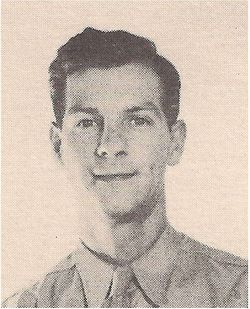
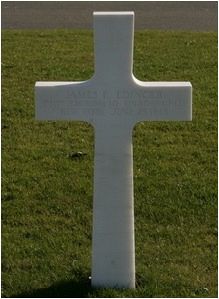
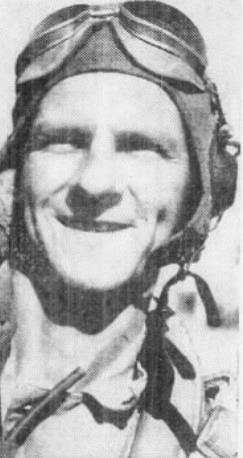
EDINGER, James Edward - Date of
birth
12 April 1912 -
Age
31 -
Place of birth
Pittsburgh, Allegheny County, Pennsylvania -
Hometown
Nassau County, New York
Personal info
Military service
- Service
number
33168703 -
Rank
Technical Sergeant -
Function
Radio Operator -
Unit
526th Bombardment Squadron,
379th Bombardment Group, Heavy
-
Awards
Purple Heart
Death
-
Status
Killed in Action - Date of
death
25 June 1943 - Place of
death
Dingstede, some 20 miles east of Oldenburg, Germany
Grave
-
Cemetery
American War Cemetery Ardennes
| Plot | Row | Grave |
|---|---|---|
| C | 1 | 6 |
Immediate family
-
Members
Frank Edinger (father)
Maud (Myers) Edinger (mother)
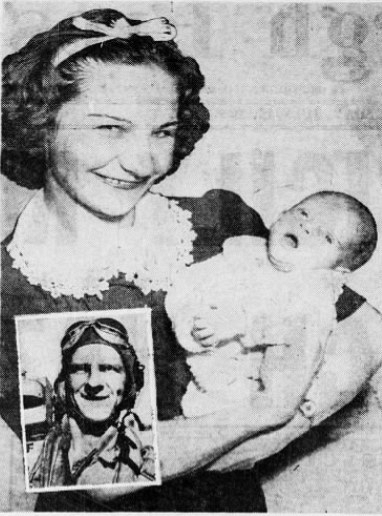
Eileen (Hamilton) Edinger (wife)
James W. Edinger (son)
Plane data
- Serial
number
42-5839 -
Data
Type: B-17F
Destination: Hamburg, Germany
Mission: Bombing of the port
MACR: 1367
More information
T/Sgt James E. Edinger was a construction an maintenance painter. He enlisted in New Cumberland, Pennsylvania on 6 April 1942.275 B-17s make scattered attacks on targets of opportunity in NW Germany when primary targets at Bremen and Hamburg are obscured by clouds. The 379th Bomber Group attacked Wangerooge Island in The Netherlands on the way back to England.
Extract from the statement of 1st Lt William G. Hughes, the sole surviver of the crew of ten:
"Between Hamburg and Wilhelmshaven we were under constant attack by numerous German fighters of all types. South of Oldenburg our plane was attacked severly by fighters. One engine was knocked out and another on fire. A 20 mm burst in our oxygen equipment and set the plane on fire. We received the signal to bail out.
After ascertaining that the bombardier, 2nd Lt Wallace J. Cosper, was unhurt and ready to leave the ship, I proceeded tot the escape hatch. There I found F/O George Barnett ready to jump. I floowed F/O Barnett through the hatch and after opening my chute, at approximately 25,000 feet, spotted another chute about 100 feet lower than I. I also noticed still another chute higher than I, floating free with one one attached. At this time, our B-17 exploded. No other chutes were seen by me.
Upon landing, I was immediately surrounded by German civilians and one or two members of the Wehrmacht. In a field adjacent to where I landed, one other person landed. Ignoring the Germans, I jumped a hedge and rushed into the field to see why the other person just landed did not get up. On arrival I recognized the person as S/Sgt Hugo Pettinati. On arrival I found him unconscious and bleeding profusely through the mouth. Aided by some French workers and one or two Germans, we carried him into a nearby shed. German girls came with first aid and equipment. Before this could be administered, S/Sgt Pettinati died.
The Germans would not permit me to examine S/Sgt Pettinati, but covered him with his parachute, and took me off for search. It is my belief that he died as a result of a bullet wound in the chest. Later, while I was under guard, a parachute was brought into the court yard where I was, and I identified this chute as having belonged to F/O Barnett. I believe this to be the empty chute I had seen floating."
The killed crew members were initially buried at the New Cemetery at Oldenburg, Germany on 30 June 1943.
Source of information: Raf Dyckmans, Peter Schouteten, www.wwiimemorial.com, www.archives.gov, www.fold3.com - MACR, Pennsylvania, U.S., Veteran Compensation Application Files
Photo source: www.findagrave.com - Brown, Pittsburgh Post Gazette - 17 November 1942, The Pittsburgh Press - 15 July 1943